Wednesday, July 31, 2019

What if I am reported to the Texas Nursing Board and fired? Straight talk from Joe Flores, nurse practitioner and attorney


The Termination
1. You have rights under Texas and Federal Law. Get an employment law consult within 1 week of termination.
2. If you have seen fraud or been asked to document fraudulently, write down details including who said what, where, when, how. Even write down patient names and try to remember room numbers. HIPPA does not apply to the federal and state agencies I will plug you in with.
3. Did your employer violate Medicare/Medicaid rules? Services not rendered? You may not have the power but your lawyer and the government do.
4. Get a Texas Workforce Hearing with your lawyer at your side. It is recorded sworn testimony that can be used for an employment lawsuit later.
****Please note that lawsuits are not easily won-especially in labor law. Often even a small settlement with a positive letter of rehire is a major victory. Losing cases is a reality before they really get going. Fraud, sexual harassment with witnesses and a past pattern are the strongest cases. The EMR "gotcha" write up game is the easiest way a nurse is railroaded and deemed unsafe by employers.

I am general counsel for employers but do not play those games. If there is ethical room, I offer the option to resign and if it is a minor incident found by the peer review committee than no board complaint.
The Board Complaint
 You may receive a Board Complaint especially if fired or a  negative outcome occurred. The law requires reporting of terminated nurses but facilities rarely give due process-- which includes proper peer review under the Health Care Quality Improvement Act. Seldom do facilities follow proper employment or BON rules. 

BON's Standard Policy
"We don't get involved in employment issues"
The Board's position is VERY slowly changing, but for now they don't get involved with employment issues. You can argue this issue but you could risk looking like someone who thinks everyone is always out to get them...and you are innocent. 

The BON wants to hear mitigating circumstances not excuses or finger pointing. The "Ain't Fair Law" if it ever existed, never or seldom if ever works. The Board's job is to make sure a nurse practices safely and if you catch a complain, your job is to convince them you are safe. Very safe. 
The Machines
EMR/MAR the electronic shield vs. sword. Nurses get tarred and feathered all the time by the EMR/MAR game. While others in the same group where you worked may have gotten away with murder, you may have be singled out for complaining justly about poor staffing, danger to patients, abusive supervisors or physicians being bullies, etc. 

You are the problem for whistle blowing? The irony: they are the problem yet you are the danger. Everyone makes documentation and med documentation errors. The EMR in my opinion, not because I am over 40, is a real pain in the A__. It takes away from real patient care by at least 10 percent. What a waste of time and it dehumanizes the nurse/patient relationship. In all fairness, the government first gave a carrot then the stick unless doctors and institutions played ball and used EMR a decade-plus ago. A multi-billion dollar industry is what it is now.  
More about the Board Complaint 
They give you 20 days to not only get over the stress ulcer and near MI that the complaint (which will make you sound like the worst nurse on the planet as you read the allegation(s))gives you, but also the lock starts ticking the date on the document--not when received. Do not get into long winded free-advice seeking conferences with the Board investigator that signed the complaint. I know their boss, Tony Diggs, big Chief Investigator. It will only make your case worse.

What if I do not go and pick up the certified letter? Now is not the time to bury your head in the sand. Pick up the letter from the post office! 
                                                    Now what?
Do not go out and spend thousands on a lawyer who handles car wrecks. You do not go to an OB/GYN or procto for a growth you saw on our shoulder that is asymmetrical, versicolor, over 5 millimeters and irregularly shaped or to a procto for a board complaint! 
Get a Qualified Attorney 
Get a lawyer who is known for nurse board cases (and, NO! This is not a solicitation--I have colleagues I trust that I can refer you to if you cannot decide on someone...but that takes 1-3 hours out of my staff and my day so I do bill administratively for the 40+ requests per week). 
The Smart Move 
Get a consult first. Translation: Ask for an hour or two ($250-$600) before you buy the whole enchilada. You can see if  you are a good fit or not. Well worth it. 

Why should I pay for a consult much less someone to defend me? Want to learn more? Email info@floreslawfirm.com to receive a free copy of this chapter.  

****Note: The views expressed in this article are solely the opinions of Joe Flores, JD, Family Nurse Practitioner and do not reflect the views of www.ExceptionalNurse.com. Mr. Flores is not selling anything. This is part of 120 plus hours of work he is doing for the Texas Bar Pro Bono College.  

With thanks for all you do Joe!

Donna

Thursday, July 18, 2019

I am a nurse: Color me Exceptional!


     For adults and children, this coloring book is a celebration of abilities! Twenty-three nurses are illustrated working in a wide variety of healthcare settings. All of the nurses have visible or invisible disabilities. The nurses (names have been changed) represent real-life nurses in a variety of practice settings. The nurses are members of support groups connected to the non-profit resource network, www.ExceptionalNurse.com. We hope to inspire future nurses with and without disabilities and encourage nurses who become disabled to continue to practice. A career in nursing is filled with endless possibilities. Proceeds of the coloring book sales support a scholarship program for nursing students with disabilities. 
     Please enjoy coloring these Exceptional Nurses! 

Cheers! 

Donna


https://smile.amazon.com/dp/107519606X/ref=sr_1_1?keywords=color+me+exceptional&qid=1563462644&s=books&sr=1-1

Tuesday, July 2, 2019

Think you can't do something? Take a look at Manami Ito, the first nurse in Japan with a prosthetic arm


 Nurse Manami Ito


Violinist Manami Ito


Paralympic swimmer


Mom

Much has been written about Manami Ito. She has become an inspiration to so many people! After losing her arm, she went on to finish nursing school and become a winning, Paralympic swimmer, violinist and mother! 

"She lost her right arm in a car accident in 2004, but in the years to follow, this 33-year-old has accomplished more than most of her able-bodied counterparts could ever dream". 

Here are links to stories written about her accomplishments. 


Bravo Manami! 

Cheers! 

Donna


https://www.inspiremore.com/manami-ito-one-armed-violinist/

https://youtu.be/74VZ7f4dsTU


https://thekidshouldseethis.com/post/manami-ito-plays-violin-prosthetic-arm

Thursday, June 13, 2019

How Study.com is making NCLEX Test Prep Accessible to Diverse Learners


The NCLEX examination represents the culmination of many years of hard work dedicated to the study of nursing. It is the final obstacle between studying and actually working as a Registered Nurse or Licensed Practical Nurse. The NCLEX is a challenging, application-based exam, where traditional rote-learning study techniques will likely be minimally effective. Testers with learning difficulties may find preparing for the NCLEX particularly overwhelming – testers like Robert, for example.

Robert is a nursing student with ADHD who finds it challenging to focus on one task for extended periods. This affects his ability to recall specific details and to manage his time effectively. These ADHD-related symptoms have in the past made it difficult for Robert to be successful on standardized tests, and he is concerned that they will also affect his success on the NCLEX. Since the NCLEX is a computer-adaptive test that can last for up to six hours, testers are required to be deliberate in how much time they allot to each question. For testers like Robert, it can be frustrating to prepare independently for such an exam, particularly when many test preparation resources do not account for testers with learning difficulties.

This doesn’t mean that students like Robert can’t be successful on the NCLEX, or that preparing for the NCLEX has to be an exercise in frustration. There are resources that can help students with learning difficulties; the extremely comprehensive NCLEX preparation resource developed by Study.com is one such example. The Study.com NCLEX resource is much more than just a practice test – it’s really more of a practice hub, designed with all variety of learners in mind.

To begin with, both the Study.com NCLEX-RN and NCLEX-PN study guides are more than just topic outlines and key word definitions. In fact, each guide is a fully-developed curriculum that supports each of the concepts tested on the NCLEX-RN and NCLEX-PN exams. The guides are broken down into distinct chapters, each centered on a different aspect of nursing. Within each chapter are video lessons that elaborate on the principal ideas relative to each chapter’s theme, flash cards for reviewing key terms, and quizzes and practice tests.

For test takers with learning difficulties, particularly those that affect executive functions like attention, memory, and organization, this compartmentalized approach makes preparing for the NCLEX much more manageable. All lessons are marked with a timestamp, so testers can organize their study time before even beginning a study session. The videos are close-captioned and can be sped up or slowed down to better suit the needs of each learner; this feature is particularly useful for testers who face challenges with reading or with auditory processing, as it allows the viewer to simultaneously read and hear the information. There are also well-organized written transcripts for the video lessons available just under the video player.

When it comes to preparing for the exam itself, Study.com’s NCLEX resources help establish a strong foundation of knowledge by including quizzes within each lesson. The lesson quizzes are comprised of 30 multiple choice questions, with the ability to skip and come back to certain questions as necessary. There is a timer embedded on the quiz page, to provide learners like Robert a visual reminder that can help them regain focus and manage their time efficiently. That each quiz targets only one major concept at a time is also an effective way to target students’ attention and boost recall, which can be areas of difficulty for students who face learning challenges.

Finally, each Study.com NCLEX preparation guide offers a 50-question cumulative practice test. The practice test covers all topics previously addressed during the course and, like the shorter lesson quizzes, comes equipped with a timer. Wrong answers receive a detailed video explanation to clear up misunderstandings, and a link back to the lesson where the topic was initially covered for further review of potentially tricky material.

Of course, the Study.com NCLEX preparation guides are not just for test takers with learning difficulties. However, they are unique in that they account for the needs of an increasingly diverse candidate pool and ensure that all aspiring nurses go into the NCLEX as prepared and equipped for success as possible.  

Visit https://study.com for more information

Cheers,

Donna

*This post was sponsored by Study.com


Sunday, June 9, 2019

Meet the Rollin' RNs!


Nothing stopping these two nurses!!!!

Rollin' RN Patty states, 

"As a 1983 graduate, I've been nursing for quite a while. In 2009, my husband and I were in a car accident that left me paralyzed from T3-4 complete paraplegic. I wasn't ready to hang up my nursing cap, so I created the Rollin RN on Facebook and write in an easy to understand manner on medical topics that the spinal cord injury folks may have difficulty understanding." 

"In 2015, another RN with a spinal cord injury joined me in writing articles. We write purely from our heart on topics we find that lead to confusion on SCI Facebook groups. We are now "The Rollin RNs"."


The Rollin RNs can be found on Facebook athttps://www.facebook.com/rollinrn/


Bravo and Roll on!

Donna

Tuesday, May 7, 2019

Let's celebrate nurses with disabilities during Nurses Week


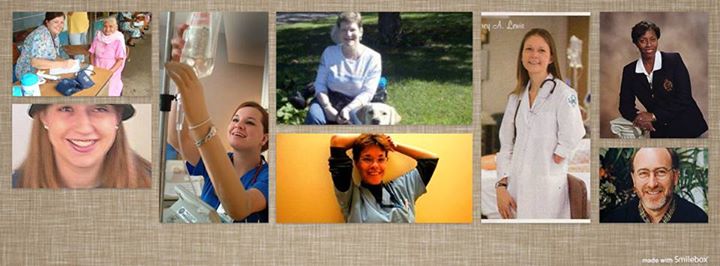
This slide show was created, over 9 years ago, by www.ExceptionalNurse.com, as a tribute to nurses with disabilities for Nurses Week.

It features nurses from all over the USA who have various disabilities. The show is a celebration of ability!

For those included in the slide show, please update us.


Cheers!

Donna

Saturday, April 13, 2019

Examples of reasonable accommodations for nursing students with disabilities


Often nursing students with disabilities ask, "What accommodations or adjustments can I request?" Some students are unaware of what is possible. 

"The appropriate academic adjustment must be determined based on your disability and individual needs. Academic adjustments may include auxiliary aids and services, as well as modifications to academic requirements as necessary to ensure equal educational opportunity. Examples of adjustments are: arranging for priority registration; reducing a course load; substituting one course for another; providing note takers, recording devices, sign language interpreters, extended time for testing, and, if telephones are provided in dorm rooms, a TTY in your dorm room; and equipping school computers with screen-reading, voice recognition, or other adaptive software or hardware" (U.S. Department of Education, 2011, para 12). 

But what about accommodations or adjustments specific to nursing students?

Nursing students and campus disability services staffers were asked, "What accommodations have been provided to nursing students with disabilities?" The responses included the following:
     Note taker for lectures 
Extra time for review of charts in clinical
Extra time for tests
Distraction free testing
Reader for exams
Frequent breaks
Audio books, Audio recording 
Magnifier
Extended or open-ended time for demonstration of skills
Second person to be the "other hand" during a catheterization
Wearable microphone connected via Blue Tooth to hearing aids
Amplified/electronic stethoscope
FM system for clinical
Sign language interpreter
Service dog       
...............................................          

References
U.S. Department of Education, Office for Civil Rights (2011). Students with Disabilities Preparing for Postsecondary Education: Know Your Rights and Responsibilities. Retrieved on April 12, 2019 from https://www2.ed.gov/about/offices/list/ocr/transition.html

Cheers!

Donna
P.S. Please feel free to add to this list.